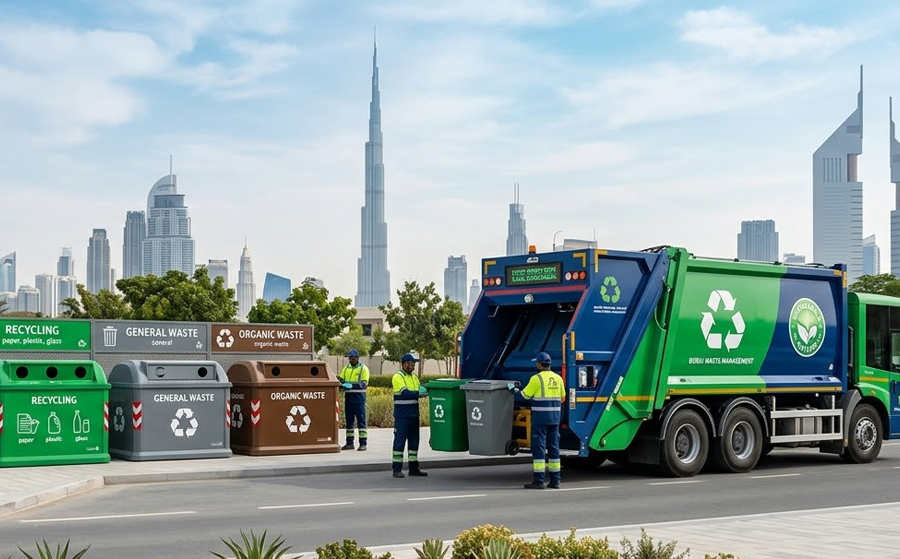
TInside Dubai’s Clean City System:
How Waste Management Works in Dubai

Inside Dubai’s Clean City System: How Waste Management Works in Dubai
March 17, 2026 | Author : Blueline

Stand on a busy street in Dubai after a major event, or walk through a crowded commercial district late at night. Within hours, the streets are spotless again. Trash bins are emptied, construction debris disappears, and recycling containers are cleared without disrupting daily life.

This efficiency isn’t accidental. Behind Dubai’s polished image is one of the region’s most organized urban environmental systems. The city has built a structured network of regulations, collection systems, recycling programs, and modern treatment facilities that keep millions of residents and visitors living in a clean environment.

Understanding how waste management works in Dubai reveals how carefully planned infrastructure and environmental policies combine to maintain urban cleanliness. Waste handling in the city involves multiple stages—from segregation at the source to recycling and advanced disposal technologies.

Businesses, residential communities, construction projects, and industries all play a role in this system. Following waste segregation rules in Dubai, complying with recycling laws in Dubai, and adopting sustainable waste management practices are all essential components of this process.

In this guide, we explore the entire waste management cycle in Dubai, the regulations that govern it, and the environmental strategies helping the city move toward a sustainable future.

The Waste Management System in Dubai

Dubai generates thousands of tons of waste every day. Residential waste, commercial waste, industrial waste, construction debris, and electronic waste all require different handling methods.

Understanding how waste management works in Dubai begins with recognizing that waste is not treated as a single category. Instead, it is divided into different streams, each requiring specialized handling procedures.

The waste management system includes:

  • Waste segregation at the source
  • Waste collection and transportation
  • Recycling and material recovery
  • Specialized treatment processes
  • Final disposal in approved facilities

Each stage follows strict waste segregation rules in Dubai and complies with environmental regulations designed to minimize landfill waste and encourage recycling.

These policies reflect the growing importance of recycling in UAE, as the country aims to reduce environmental impact and promote resource conservation.

Waste Segregation: The First Step in Waste Management

The process begins with sorting waste before it even leaves homes or businesses.

Following waste segregation rules in Dubai, waste is typically separated into categories such as:

  • General waste
  • Recyclable materials
  • Organic waste
  • Hazardous waste
  • Electronic waste

Proper segregation is essential to ensure that recyclable materials can be recovered efficiently.

The city’s recycling laws in Dubai require businesses and institutions to separate recyclable waste from general waste whenever possible.

Segregation also helps improve the effectiveness of sustainable waste management practices, reducing the amount of waste that ends up in landfills.

Understanding how waste management works in Dubai requires recognizing that this first step—waste separation—is one of the most important parts of the entire system.

Waste Collection and Transportation

Once waste is sorted, collection teams transport it from residential areas, commercial districts, and industrial zones to processing facilities.

Collection systems operate according to structured schedules designed to handle the city’s daily waste output efficiently.

Businesses that understand how businesses manage waste in Dubai often work with professional waste service providers to coordinate collection schedules and ensure compliance with environmental regulations.

Organized waste collection plays a critical role in implementing sustainable waste management practices, preventing waste accumulation and maintaining hygiene in densely populated areas.

Transportation vehicles are specially designed to handle different waste categories, ensuring compliance with recycling laws in Dubai and safety guidelines.

Recycling: Turning Waste into Resources

One of the key pillars of Dubai’s waste strategy is recycling.

Recycling facilities process materials such as plastics, metals, paper, glass, and electronics. These materials are sorted, processed, and converted into reusable raw materials.

This process highlights the importance of recycling in UAE, where environmental policies encourage resource recovery instead of landfill disposal.

Recycling programs also support sustainable waste management practices by reducing the demand for new raw materials.

Understanding how waste management works in Dubai requires recognizing that recycling is not just a supplementary service—it is a central component of the waste management system.

By strengthening recycling infrastructure and enforcing recycling laws in Dubai, the city is working toward a circular economy where waste materials are reused rather than discarded.

Electronic Waste Recycling

Electronic waste is one of the fastest-growing waste streams in modern cities.

Devices such as smartphones, computers, batteries, and electronic appliances contain valuable materials that can be recovered and reused.

Proper electronic waste recycling in Dubai ensures that these materials are processed safely while preventing environmental contamination.

Specialized recycling facilities handle electronic waste recycling in Dubai, extracting metals and reusable components from discarded electronics.

This process supports the importance of recycling in UAE while preventing hazardous materials from entering landfills.

Electronic recycling also demonstrates how sustainable waste management practices are evolving to address modern waste challenges.

Construction Waste Management

Dubai’s rapid urban development generates significant construction waste.

Concrete, steel, wood, and packaging materials are common by-products of building projects. Without proper handling, these materials could create environmental and logistical challenges.

Effective construction waste management in Dubai ensures that debris from building sites is collected, sorted, and recycled whenever possible.

Many construction companies now integrate recycling programs into their projects, recognizing the benefits of professional waste management.

Construction waste recycling helps reduce landfill pressure and supports the city’s sustainability goals.

By improving construction waste management in Dubai, developers contribute to more environmentally responsible urban development.

Types of Waste Disposal Methods

Even with advanced recycling systems, some waste cannot be reused and must be disposed of safely.

Understanding the types of waste disposal methods used in Dubai helps illustrate the complexity of the waste management system.

Common disposal methods include:

  • Landfill Disposal
  • Waste-to-Energy Technology
  • Specialized Treatment Facilities

Landfills are still used for waste that cannot be recycled or treated. However, modern landfill facilities include environmental protection systems designed to prevent contamination.

Some waste is processed through energy recovery systems that convert waste into electricity or heat.

Hazardous waste, medical waste, and industrial waste require controlled treatment before disposal.

These types of waste disposal methods ensure that different waste streams are handled safely and responsibly.

How Businesses Manage Waste in Dubai

Businesses generate a large portion of the waste produced in Dubai.

Understanding how businesses manage waste in Dubai helps explain how the private sector contributes to environmental sustainability.

Companies implement structured waste management programs that include waste segregation, recycling initiatives, and regular waste collection.

By following waste segregation rules in Dubai, businesses ensure that recyclable materials are separated from general waste.

Many organizations also adopt sustainable waste management practices to reduce their environmental footprint.

The benefits of professional waste management become clear in commercial environments where efficient waste systems help maintain cleanliness, improve operational efficiency, and ensure regulatory compliance.

Sustainable Waste Management Practices

Dubai’s long-term environmental strategy focuses heavily on sustainability.

Key sustainable waste management practices include:

  • Promoting recycling initiatives
  • Reducing landfill dependency
  • Encouraging waste segregation
  • Implementing energy recovery systems
  • Supporting circular economy models

These initiatives highlight the growing importance of recycling in UAE and the role waste management plays in environmental protection.

By integrating sustainable waste management practices across industries, the city continues to improve its environmental performance.

Benefits of Professional Waste Management

Professional waste management services play a critical role in supporting Dubai’s environmental goals.

The benefits of professional waste management include improved waste handling efficiency, regulatory compliance, and environmental protection.

Businesses that rely on professional services gain access to structured waste programs that simplify waste handling operations.

The benefits of professional waste management also include improved workplace hygiene and reduced environmental impact.

Understanding how waste management works in Dubai demonstrates why these services are essential for maintaining a clean and sustainable urban environment.

The Role of Regulations and Environmental Policies

Environmental regulations play an important role in shaping waste management practices in Dubai.

Strict recycling laws in Dubai ensure that businesses and organizations follow responsible waste handling procedures.

Regulations also enforce waste segregation rules in Dubai, encouraging proper waste sorting and recycling.

These policies support sustainable waste management practices by reducing waste generation and promoting recycling initiatives.

Organizations that comply with these regulations contribute to the importance of recycling in UAE and support national sustainability goals.

Businesses seeking regional environmental solutions may also explore services such as Waste management UAE, which provide integrated waste handling support across the country.

The Future of Waste Management in Dubai

Dubai continues to invest heavily in environmental innovation.

Advanced recycling facilities, smart waste monitoring systems, and waste-to-energy projects are transforming the way waste is managed.

These developments demonstrate how how waste management works in Dubai is constantly evolving.

Future improvements will focus on strengthening sustainable waste management practices, expanding recycling programs, and improving construction waste management in Dubai.

Technology will also play a key role in improving electronic waste recycling in Dubai and optimizing waste collection systems.

Conclusion

Dubai’s reputation as a clean, modern city is supported by a highly organized waste management system that operates behind the scenes every day.

Understanding how waste management works in Dubai reveals a carefully structured network of regulations, recycling programs, and disposal technologies.

By following waste segregation rules in Dubai, complying with recycling laws in Dubai, and adopting sustainable waste management practices, residents and businesses contribute to a healthier environment.

Improving construction waste management in Dubai, expanding electronic waste recycling in Dubai, and implementing efficient types of waste disposal methods will continue to strengthen the city’s environmental infrastructure.

Most importantly, recognizing the importance of recycling in the UAE and the benefits of professional waste management ensures that Dubai can maintain its status as one of the world’s cleanest and most sustainable cities.

Frequently Asked Questions (FAQs)

How does waste management work in Dubai?

Waste management in Dubai involves waste segregation, collection, recycling, treatment, and safe disposal through regulated environmental systems.

What are the waste segregation rules in Dubai?

Waste segregation rules in Dubai require separating recyclable materials, general waste, hazardous waste, and electronic waste before disposal.

What are the recycling laws in Dubai?

Recycling laws in Dubai encourage businesses and communities to separate recyclable materials and reduce landfill waste.

Why is recycling important in the UAE?

The importance of recycling in UAE lies in reducing landfill waste, conserving resources, and supporting environmental sustainability.

What are sustainable waste management practices?

Sustainable waste management practices include recycling, waste reduction, energy recovery, and proper waste segregation.

How do businesses manage waste in Dubai?

Businesses manage waste in Dubai by implementing waste segregation, recycling programs, and scheduled waste collection services.

What are the benefits of professional waste management?

The benefits of professional waste management include efficient waste handling, regulatory compliance, environmental protection, and improved workplace hygiene.

What are the types of waste disposal methods used in Dubai?

Common types of waste disposal methods include recycling, landfill disposal, waste-to-energy systems, and specialized treatment facilities.

What is construction waste management in Dubai?

Construction waste management in Dubai involves collecting, sorting, and recycling materials generated from building projects.

How does electronic waste recycling work in Dubai?

Electronic waste recycling in Dubai involves processing discarded electronics to recover valuable materials and prevent environmental contamination.

Why are waste segregation rules important?

Waste segregation rules in Dubai help improve recycling efficiency and reduce environmental impact.

Can businesses recycle their waste in Dubai?

Yes, businesses can recycle many materials such as paper, plastics, metals, and electronic waste.

What role do recycling centers play in Dubai?

Recycling centers process waste materials and convert them into reusable resources.

How does waste management support sustainability in Dubai?

Waste management supports sustainability by reducing landfill waste and promoting recycling and responsible disposal.

What is the future of waste management in Dubai?

The future includes advanced recycling technologies, waste-to-energy projects, and stronger sustainable waste management practices.